

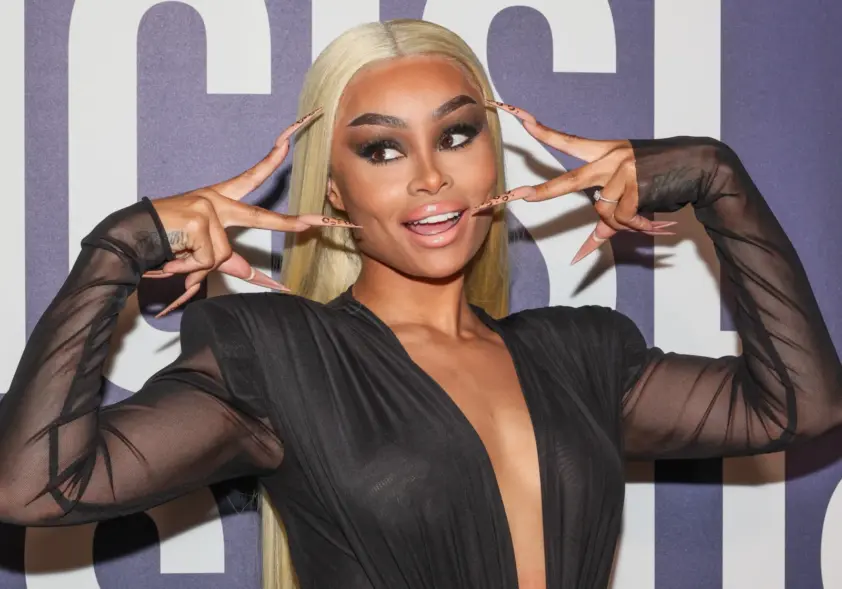
Blac Chyna was never just a name floating around celebrity gossip. She arrived with a look that was instantly legible: sculpted glamour, club-world confidence, hip-hop adjacency, beauty-business ambition and a talent for making every public appearance feel like it might become a headline by morning. Long before the OnlyFans era turned her into one of the most talked-about premium-content celebrities online, she had already built the thing that matters most on the internet: recognizability.
Watch more here →
That is why Blac Chyna videos still have a longer shelf life than ordinary influencer clips. People are not only looking at a creator; they are looking at a timeline. Music video cameos, reality TV meltdowns, red carpet footage, interviews, legal battles, makeover videos, beauty-brand content and paid-platform curiosity all sit under the same name. The interest around her comes from that collision, not from one single scene or platform.
From Miami Nightlife to Hip-Hop Visibility
Born Angela Renée White, Blac Chyna first became publicly visible through the nightlife and modeling circuit connected to early-2010s hip-hop culture. That era rewarded women who could turn club notoriety into media currency, and Chyna understood the assignment better than most. She was not presented as a polished Hollywood newcomer. She came across as sharper, flashier and more self-authored than that.
Her name started traveling outside the club world after being referenced by Drake on Miss Me, a small moment that became a big cultural receipt. Then came the visual associations: appearing as Nicki Minaj’s stunt double in Kanye West’s Monster, showing up in Tyga’s Rack City video, and becoming part of a rap-video and tabloid ecosystem where image moved faster than biography.
Those clips matter because they established the Blac Chyna template: high-glamour, high-control, impossible to miss. She was never framed as anonymous background beauty. Even when she was adjacent to bigger music names, she looked like someone preparing to become the main subject.
The Kardashian Chapter Made Her Impossible to Ignore
Browse all available videos on GoonVidz
The public relationship with Tyga put her into celebrity-news rotation, but the Rob Kardashian relationship pushed her into a different level of visibility. Rob & Chyna was messy by design, like most reality TV built around a volatile relationship, but it gave viewers something social media alone could not: scenes, arguments, family tension, confessionals and the feeling of watching a tabloid item try to become a domestic storyline.
The Kardashian connection also complicated her image. To some viewers, Chyna was the outsider who entered the most heavily managed reality-TV family in America and disrupted the machine. To others, she was simply another player in a fame economy where relationships, branding and conflict are never fully separate. Either way, she became part of a public archive that still drives interest in clips from that period.
The fallout was ugly and legally serious. The 2017 split, Rob Kardashian’s public actions involving private material, and Chyna’s later legal fight with members of the Kardashian family became major celebrity-law stories. A jury ultimately sided with the Kardashian family in the high-profile 2022 trial over claims tied to the cancellation of Rob & Chyna. For Chyna, the damage was not only personal; it became part of how the public understood her career, her control over her image and the limits of reality-TV fame.
Beauty Business, Branding and the Influencer Pivot
One reason Chyna lasted beyond the gossip cycle is that she always had a commercial instinct. Lashed by Blac Chyna, her beauty salon and cosmetics brand, fit neatly into her image: lashes, makeup, heavy glam, body-conscious styling and a beauty aesthetic designed for cameras. It was not subtle, and that was the point.
Her Instagram presence worked the same way. Chyna understood visual branding before every reality-adjacent celebrity was calling themselves a founder. Hair color changes, body-hugging outfits, beauty promotions, nightclub appearances and paparazzi-ready looks formed a steady stream of content. She did not need to explain the brand because the brand was visible in every photo.
That influencer foundation is important to understanding why her OnlyFans move landed so loudly. She was not a random celebrity testing a subscription platform. She had spent years training the public to see her as glamorous, provocative and commercially available on her own terms. OnlyFans simply put a paywall around a version of access people already associated with her.
The OnlyFans Era: Celebrity Access With a Paywall
Blac Chyna joined OnlyFans during the platform’s explosive celebrity moment, when paid subscription content was becoming a mainstream talking point instead of a niche adult-industry corner. Her arrival made sense. She had the name recognition, the visual identity and the tabloid heat. The platform gave her a way to monetize attention without waiting for a network, a record label, a casting director or a gossip site to define the angle.
Reports about her OnlyFans earnings became part of the story almost immediately. Some figures circulated wildly online, while later comments and court-related disclosures made the exact numbers less clear than the headlines suggested. But the precise total is less important than the perception: Chyna was treated as one of the biggest celebrity names to test the paid-content model, and that perception stuck.
For followers, the appeal was not simply adult content. It was proximity. OnlyFans offered the suggestion of material outside the ordinary Instagram feed: exclusive videos, premium content, behind-the-paywall updates and a less filtered version of a public figure whose image had always been tightly watched. That is why her paid-platform chapter remains central to how people discuss her online career, even after she publicly stepped away from it.
Why the Video and Archive Curiosity Lasts
Blac Chyna videos are not one clean category. There are music-video appearances from the hip-hop era, reality-TV clips from the Kardashian years, interviews, beauty content, social posts, red carpet footage and OnlyFans-related premium-content curiosity. Her archive feels scattered because her fame was built across nightlife, television, gossip media, social platforms and paid subscriptions.
That mix keeps her name active. Someone revisiting Rob & Chyna is not looking for the same thing as someone interested in her OnlyFans period, and neither is the same as someone watching her Angela White transformation interviews. The through-line is Chyna’s image: controlled, controversial, glamorous and constantly renegotiated in public.
The Angela White Reset
In recent years, the most interesting Blac Chyna story has not been another fight or another subscription headline. It has been the pivot back toward Angela White. She publicly discussed faith, sobriety, removing facial fillers, reversing cosmetic procedures and stepping away from OnlyFans. For a personality so closely associated with extreme glamour and monetized provocation, that shift landed as more than a makeover.
The reset did two things at once. It softened her public image for people who had only known her through conflict, and it reminded everyone how much of the Blac Chyna persona had been constructed under pressure. Reality TV, celebrity relationships, body scrutiny and adult-platform headlines can flatten a person into a brand. Angela White’s reemergence complicated that brand in a way that felt unusually direct.
Not everyone bought the reinvention, and Chyna has always had skeptics. But the transformation gave her a new media lane: interviews about accountability, motherhood, spirituality and identity. It also made her older premium-content era feel more like a distinct chapter than a permanent definition.
Style, Control and Why She Still Stands Out
What separates Blac Chyna from other influencer-era celebrities is not that she avoided controversy. She clearly did not. It is that she kept converting controversy into visibility without losing the core of her image. The hair, the body-conscious styling, the lashes, the unapologetic posing, the business plugs, the public feuds and the spiritual reset all belong to the same larger performance of control.
She is also a reminder that internet fame often starts before the platform that later claims credit for it. Chyna did not become famous because of OnlyFans. OnlyFans benefited from the fact that she was already famous enough to make a subscription page feel like an event. Her premium content worked as a headline because the public already knew the face, the history and the drama attached to it.
That is why she remains a sticky name in adult-adjacent entertainment coverage. She sits at the intersection of celebrity, influencer branding, reality television and premium content without fitting neatly into any single box. Her story is messy, commercial, image-driven and very online, but it is also specific. You cannot swap her name out for another creator and get the same history.
What Her Premium-Content Legacy Actually Means
Blac Chyna’s OnlyFans run is best understood as a celebrity experiment that revealed how powerful pre-existing fame can be on paid platforms. She did not need to build attention from scratch. She brought a decade of public fascination with her: the hip-hop cameos, the Kardashian drama, the beauty-business branding, the body-image discourse and the tabloid archive.
Today, the interest in her videos and premium-content history comes from that accumulated context. People remember the spectacle, but they also remember the control she fought to keep over her name. Whether she is framed as Blac Chyna the provocateur or Angela White the woman trying to rewrite the narrative, the reason she still matters is simple: she made herself impossible to ignore, then kept changing the terms of what people were looking at.
See the complete collection on GoonVidz →