

The Jessica Nigri story does not start with a studio, a reality show, or a manufactured influencer launch. It starts on a convention floor, with a costume that looked impossible to ignore and a camera culture that was just learning how fast one image could travel. The yellow Pikachu cosplay she wore to San Diego Comic-Con in 2009 turned her into one of the first cosplay names to break out far beyond the people actually standing in line at the event.
Explore the full video collection on GoonVidz
That is the reason her name still carries weight in video searches, cosplay archives, premium-content discussions and fan collections. Nigri was not simply early to the cosplay boom. She helped define what the internet expected from a cosplay creator: recognizable characters, playful exaggeration, polished photos, convention chaos, and a personality big enough to survive outside the costume.
The viral cosplay moment that made her recognizable
Before cosplay became a full creator economy, Nigri was already operating in the sweet spot between fandom and pin-up. Her breakthrough came from a simple but potent formula: familiar pop-culture characters remixed with high-gloss styling, confidence, and a very camera-aware sense of humor. The Pikachu look was the spark, but it was not a one-off accident. It revealed the version of Nigri that fans would keep following for years: funny, loud, convention-ready, and fully comfortable turning a costume into a performance.
What separated her from countless other attractive cosplayers was timing and repeatability. She did not disappear after one viral image. She kept showing up with new builds, new characters, new shoots, and more video appearances. The internet had plenty of cosplay photos; Nigri gave people a character they could follow.
That matters because her appeal has always been visual but not silent. Interviews, behind-the-scenes clips, convention footage, YouTube uploads and fan-shot videos helped build the image of someone who was more than a still photo. Her best-known content has always had movement around it: the walk through a convention hall, the reveal of a costume, the banter with fans, the playful pose that becomes a GIF before the day is over.
From convention floors to official gaming campaigns
See the full GoonVidz archive
Nigri’s career became more serious when game publishers and entertainment brands realized she could sell a character to an audience that already lived online. One of the biggest public markers was her work around Lollipop Chainsaw, where she appeared as Juliet Starling, the chainsaw-wielding cheerleader from the 2012 game. It was a perfect match for her public image: bright colors, horror-comedy energy, candy-coated danger, and a costume that looked designed to trigger both fandom and controversy.
She also became associated with gaming promotion more broadly, including work connected to titles such as Assassin’s Creed IV: Black Flag. For a certain era of internet fandom, Nigri was one of the faces proving that cosplay could move from hallway hobby to official marketing. Brands did not just want models in costumes; they wanted personalities who already had an audience and knew how to perform for cameras.
That crossover gave her credibility in two directions. Fans saw her as someone who had come from convention culture rather than being dropped into it by a marketing department. Companies saw someone who understood how fandom actually talked, joked and shared clips. It made her a useful bridge between geek culture, glamour modeling and creator-led promotion.
The PAX controversy and the double edge of visibility
No profile of Nigri makes sense without mentioning the arguments around what cosplay is allowed to look like in public. Her appearance at PAX East during the Lollipop Chainsaw promotion became one of those early-2010s internet flashpoints: too revealing for some event standards, perfectly in character to others, and instantly debated by people who had never cared about convention dress codes before.
The details have been retold enough that the larger point matters more than the play-by-play. Nigri became a symbol in the fight over sexualized cosplay, gatekeeping, professionalism and who gets to decide what “real” fandom looks like. Critics tried to frame glamour-forward cosplay as attention-seeking. Supporters saw the backlash as predictable policing of a woman who was simply better at controlling the room than most of the men commenting on her.
That tension never really left her public image. It is part of why people remember her. Nigri’s work sits in the middle of fandom, fantasy, modeling and adult-adjacent presentation. She has always made it hard for people to place her neatly in one box, and that friction is part of the appeal.
RWBY, voice work and staying bigger than a photo set
One of the smartest turns in her public career was becoming part of RWBY, Rooster Teeth’s animated series, where she voiced Cinder Fall. That role gave her a different kind of staying power. It attached her name to a character with a long-running fanbase and moved her from “cosplayer people photograph” into performance work that fans could revisit episode after episode.
Cinder Fall also fit the Nigri brand in a strangely neat way: theatrical, stylish, dangerous, and built for fan art. For viewers who knew her from conventions, the casting felt like an extension of what she was already doing. For people who found her through RWBY, it opened the door backward into her cosplay archive, videos, shoots and social presence.
That is one reason her audience has never been only one crowd. Some came for cosplay. Some came through gaming. Some came through animation. Some found her through glamour shoots or paid-platform curiosity. The overlap is messy, but it has kept the name alive longer than a single viral costume ever could.
OnlyFans and the paid-content layer
Nigri’s move into premium content made sense because she had already spent years training fans to expect more than public Instagram posts. OnlyFans did not create the interest around her; it gave that interest a more direct place to go. For a creator whose image has always mixed costume work, modeling, humor and suggestive presentation, a paid layer feels less like a pivot and more like an extension of the same controlled performance.
That does not mean every question around her premium content should be flattened into rumor or fantasy. The safer, more accurate way to understand it is this: Nigri’s paid-platform appeal comes from access, curation and exclusivity. People want the polished sets, the behind-the-scenes feel, the costume variations, the video updates and the sense that the public feed is not the whole archive.
Her OnlyFans presence also reflects a broader shift among cosplay creators. Instead of relying only on convention bookings, sponsor deals or algorithm-friendly posts, creators like Nigri can monetize the audience that already values the work. Costumes are expensive. Shoots take labor. Character modeling is not just “putting on an outfit.” Paid content made the business side more visible.
Why Jessica Nigri videos still get attention
The video interest around Nigri lasts because her career was built in moments people want to revisit: convention clips, costume reveals, interviews, gaming promos, RWBY-related appearances, behind-the-scenes uploads and exclusive videos tied to premium platforms. Still images made her famous, but video made her feel like a personality.
There is also an archive effect with her career. She has been online long enough that different audiences remember different versions of her: the viral Pikachu cosplayer, the Lollipop Chainsaw promo model, the YouTube personality, the RWBY voice actress, the Instagram glamour-cosplay creator, and the OnlyFans-era premium-content figure. Looking through old clips and newer paid-content discussions is almost like watching cosplay internet grow up in public.
Her style: loud, playful and engineered for fandom
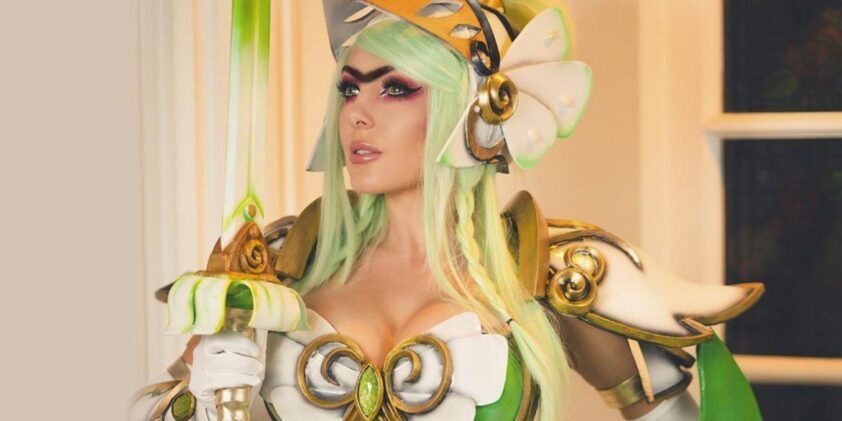
Nigri’s best-known looks rarely aim for subtlety. They are bright, exaggerated, character-driven and built for instant recognition. She understands silhouette and color the way a strong thumbnail artist does: the audience should know the character before reading a caption. That instinct is part of why her work translates so well into clips and short-form video.
There is also an unseriousness to her public persona that keeps the glamour from feeling cold. She has often leaned into goofy expressions, chaotic convention energy and self-aware humor. That is important. The costume may be polished, but the person inside it does not come across like a lifeless mannequin. She sells fantasy without acting embarrassed by the ridiculousness of fandom.
In an industry full of creators trying to look flawless, Nigri’s edge has been looking committed. She commits to the bit, the character, the pose, the joke and the camera. That is why her clips travel better than a standard modeling reel.
Why she still stands apart
Jessica Nigri remains memorable because she belongs to a very specific internet era but never feels trapped inside it. She came up when cosplay was still fighting for mainstream respect, rode the wave as gaming and anime culture became more commercial, and adapted into the creator economy without losing the loud convention-floor identity that made her famous.
Her name still pulls people toward videos, premium content and old archives because there is a real career behind the curiosity. The interest is not only about what is hidden behind a paywall or buried in an old clip. It comes from years of public work: the viral costume, the gaming campaigns, the convention debates, the voice acting, the fan loyalty and the ability to make a character feel like an event.
For a lot of fans, Nigri is not just someone they once saw in a cosplay photo. She is part of the reason cosplay became a career people could understand, argue about, subscribe to and keep revisiting years later.
See the complete collection on GoonVidz →